How to Create AI Avatar Video with Heygen
Make a HeyGen AI avatar video two ways: directly in HeyGen, or inside a VideoGen project where the avatar sits beside product shots, captions, and music.

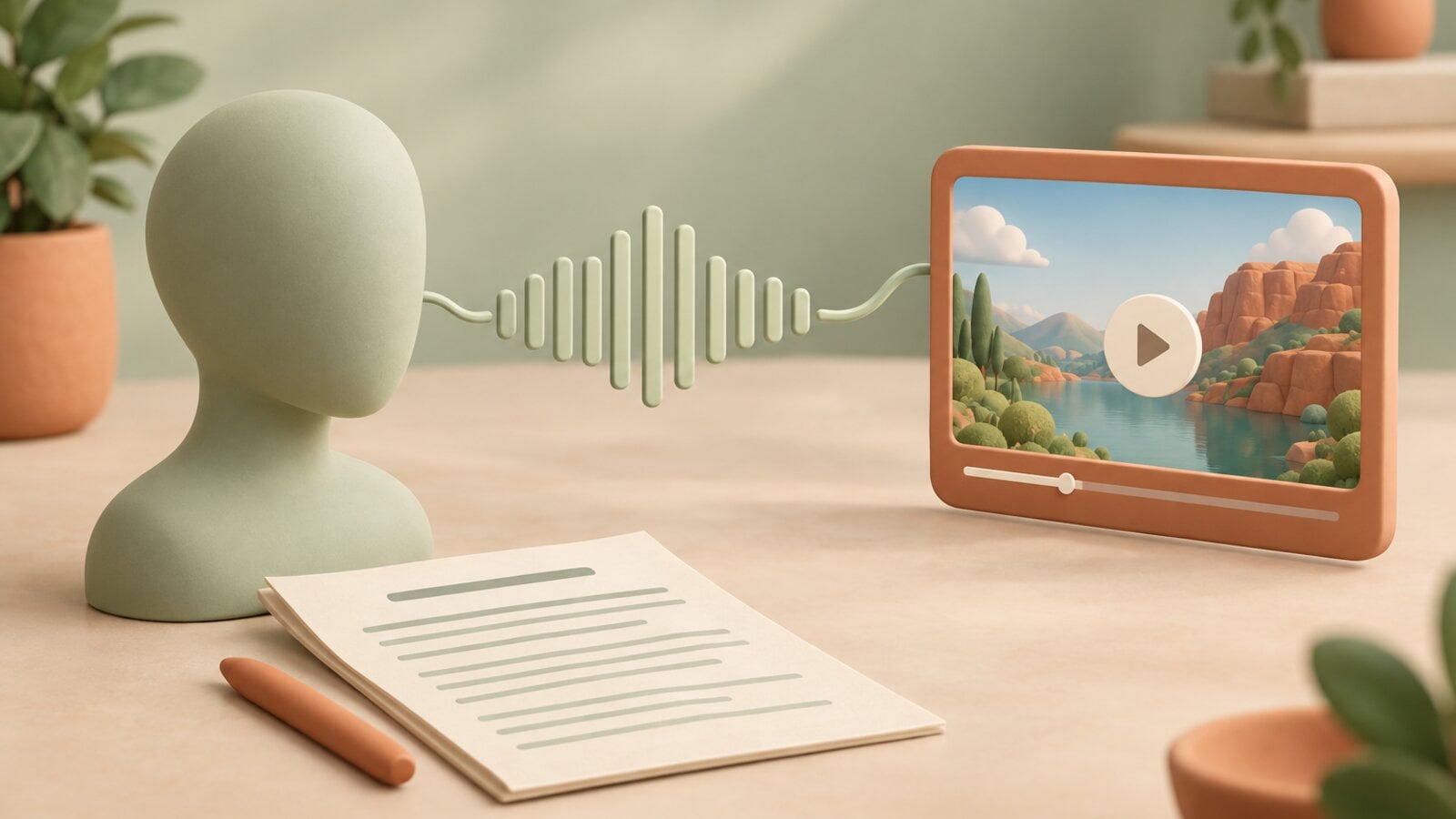
To create a HeyGen AI avatar video, pick or create an avatar, give it a script, choose a voice, generate the clip, and export it. You can do this in HeyGen itself, or inside a VideoGen project, where supported avatar workflows use HeyGen technology and the avatar becomes one scene beside product shots, captions, and music.
This guide covers both paths, then gives script-writing tips and a review checklist so the finished clip looks and sounds right.
What you need before you start
Gather these before you open either tool:
- A script. Short sentences work best. One idea per passage.
- A decision on the face. A stock avatar, or a digital twin of a real person.
- A voice. A stock voice, or a cloned voice if your plan supports it.
- The rest of the video, if the avatar is one scene. Product shots, screen recordings, or images you want around it.
- An aspect ratio. 16:9 for a landing page or deck, 9:16 for vertical social, 1:1 for feeds.
If you are still deciding whether HeyGen fits your project, read is HeyGen the best AI video generator first.
Create an avatar video in HeyGen
HeyGen is an avatar-first tool, so the path is short. Exact labels change over time, but the steps stay the same.
- Choose an avatar. HeyGen offers 500+ stock avatars on the Free plan and 700+ on paid plans, or you can build a custom digital twin of a real person.
- Write or paste the script. Keep each passage to one idea.
- Choose a voice. Voice cloning is available on paid plans.
- Generate the video and watch it end to end.
- Export or share it.
Plan limits matter here. As checked in October 2026 on the HeyGen pricing page, the Free plan allows up to 3 videos per month, videos up to 1 minute, a watermark, and 720p sharing. The Creator plan, at $29 per month or $24 per month billed annually (checked October 2026 on the same page), raises the limit to videos up to 30 minutes with 1080p export, watermark removal, and voice cloning.
This path fits a video that is all avatar, such as a training lesson or a dubbed announcement.
Create a HeyGen avatar video inside a VideoGen project
Use this path when the avatar is one scene in a longer video. VideoGen uses HeyGen technology in supported avatar workflows, and you do not need a separate HeyGen account. The HeyGen AI page explains the integration.
- Start a new VideoGen project. Pick the workflow that matches your starting point: script-to-video, voiceover-to-video, slideshow-to-video, or storyboard-to-video.
- Add an avatar scene. Choose a stock actor or create one. The AI avatar generator page shows the options.
- Paste the lines for that scene. VideoGen turns the script into speech audio with text-to-speech voices, including ElevenLabs and Inworld voices.
- Generate the clip. The avatar workflow pairs the actor image with the speech audio. Routing is HeyGen or Hedra, chosen per request based on the actor and the generation requirements. If the actor image does not suit HeyGen (for example, the face is small, turned, or obstructed), VideoGen generates a square, front-facing, white-background headshot of that actor from its existing references and retries. If no face can be detected even then, VideoGen shows a clear error before spending credits on the clip.
- Place the scene. The avatar clip lands in the timeline beside product footage, screen recordings, and generated scenes. Supported avatar workflows can remove the clip background so the avatar sits over another scene.
- Finish the video. Enable captions on the whole project in one step, add background music (a library track, an upload, or a generated track from a prompt VideoGen can write from your script), add transitions, switch the aspect ratio on the whole project in one request, and export.
If a scene is wrong, regenerate that scene alone. The rest of the timeline stays in place.
VideoGen has a free plan with limited AI credits and no exports. AI features and exports need a paid plan. See VideoGen pricing for details.
Write a script an avatar can deliver
An avatar reads what you give it. The script decides most of the quality.
- Write for the ear, not the eye. Read every line out loud before you generate. If you run out of breath, split the sentence.
- One idea per passage. A passage of two or three sentences is easier to follow than a paragraph.
- Use plain words. Short, common words are clearer in speech than long ones.
- Spell out what the voice should say. Write "twenty-four seven" if that is how you want it spoken.
- Keep the spoken part short when the avatar is one scene. Let product shots and captions carry the detail.
- Put the key point first. Viewers on social scroll fast.
A good test: if you would not say the line to a colleague in a meeting, rewrite it.
Review the clip before you publish
Check these before the clip goes into the final video:
- Mouth movement. Watch a few words with the sound off. The lips should open and close with the syllables.
- Pacing. The voice should pause between ideas. If it rushes, shorten the passage or split it into two scenes.
- Framing. Eyes near the upper third, clear headroom, and the same framing across avatar scenes.
- Audio sync. Play the clip at full volume and confirm the words land on the mouth movement.
- End frame. The clip should end on a neutral pose so the cut to the next scene is clean.
- Background edges. If you removed the background, look at hair and shoulders against the new scene.
Then turn on captions. Automatic captions from the voiceover reach 98%+ transcription accuracy and export as burned-in text, SRT, or VTT. The auto subtitle generator page covers the styles you can pick.
Frequently asked questions
Do I need a HeyGen account to make an avatar video in VideoGen?
No. VideoGen uses HeyGen technology in supported avatar workflows, and no separate HeyGen account is needed. Avatar generation routes to HeyGen or Hedra per request, so not every avatar clip is guaranteed to use HeyGen.
Can I make a HeyGen avatar video for free, and what are the limits?
Yes, within limits. As checked in October 2026 on the HeyGen pricing page, the Free plan allows up to 3 videos per month, up to 1 minute each, with a watermark and 720p sharing. In VideoGen, AI features such as avatar generation need a paid plan.
What happens if my actor photo shows a small, turned, or partly hidden face?
VideoGen generates a square, front-facing, white-background headshot of that actor from its existing references and retries the avatar generation. If no face can be detected even then, you see a clear error before any credits are spent on the clip.
Can I put a talking avatar over my product footage without a green screen?
Yes, in supported avatar workflows. VideoGen can remove the clip background so the avatar sits over another scene, such as product footage or a screen recording, in the same timeline.
Start a project in VideoGen, add an avatar scene beside your product footage, and finish it with captions and music in one place.

 Richard D.

 David Grossman